04.07.—09.08.2026
"Premeditatio Malorum"
Kunsthalle Düsseldorf, Suitbertus See, Düsseldorf, Germany
How can highly efficient predator species create non-functional beauty? These are us: we invented non-stop surplus violence and suffering. Yet some of us wish something beyond daily cruelty.
Human aggression is no longer bound to metabolism, territorial defense, reproductive access, or immediate threat response; it is stored, amplified, and transmitted in heads through ideologies, concepts, social drill, state propaganda, clichés, chimeras, heroic myths, religious permissions, economic abstractions, national songs, family commands, school rituals, institutional rewards, and the grammar of obedience. We are extremely efficient biological robots, optimized for domination and irrational aggression by large-group myth inheritance, neurochemical reward, fear conditioning, collective pressure, hierarchical mimicry, shame, fear, and coercive behavior. Our nervous systems are perpetually modified by rapid suspicion, status competition, revenge, mate guarding, territorial reaction, and threat anticipation; society further scales these basic reflexes into a planetary disaster. Often the individual human is fragile, confused, and brief, but the large social entity is space-dominant, recursive, and technically extended. We serve society as cells serve a body. We carry its instructions in language, repeat its immune reactions as politics, defend its myths as if they were organs, and call its appetite culture, its violence order, its expansion progress. This condition may be called sociocarnesis: the conversion of individual predatory impulses into collective, self-replicating structures of domination. It may also be named as memotaxis: the directed movement of human behavior by inherited symbolic attractors. The old predator needed hunger or threat; the human superorganism needs only a strong, dehumanizing, transmissible idea.
This is the contemporary form of premeditatio malorum, and most probably “our progress” can become far worse. It is no longer only the Stoic practice of mentally rehearsing loss, injury, exile, illness, or death in order to strengthen inner resilience. That ancient discipline remained human-sized: it prepared the single mind for private misfortune. My work externalizes this exercise and turns it into hypothetical bioethics. It asks not only what evil may happen to me, but what evil we have already normalized as state, economy, commonwealth, tradition, hierarchy, necessity, and global sense. It asks how our species, capable of modeling another being’s pain, can continue to organize worlds in which pain is rendered useful.
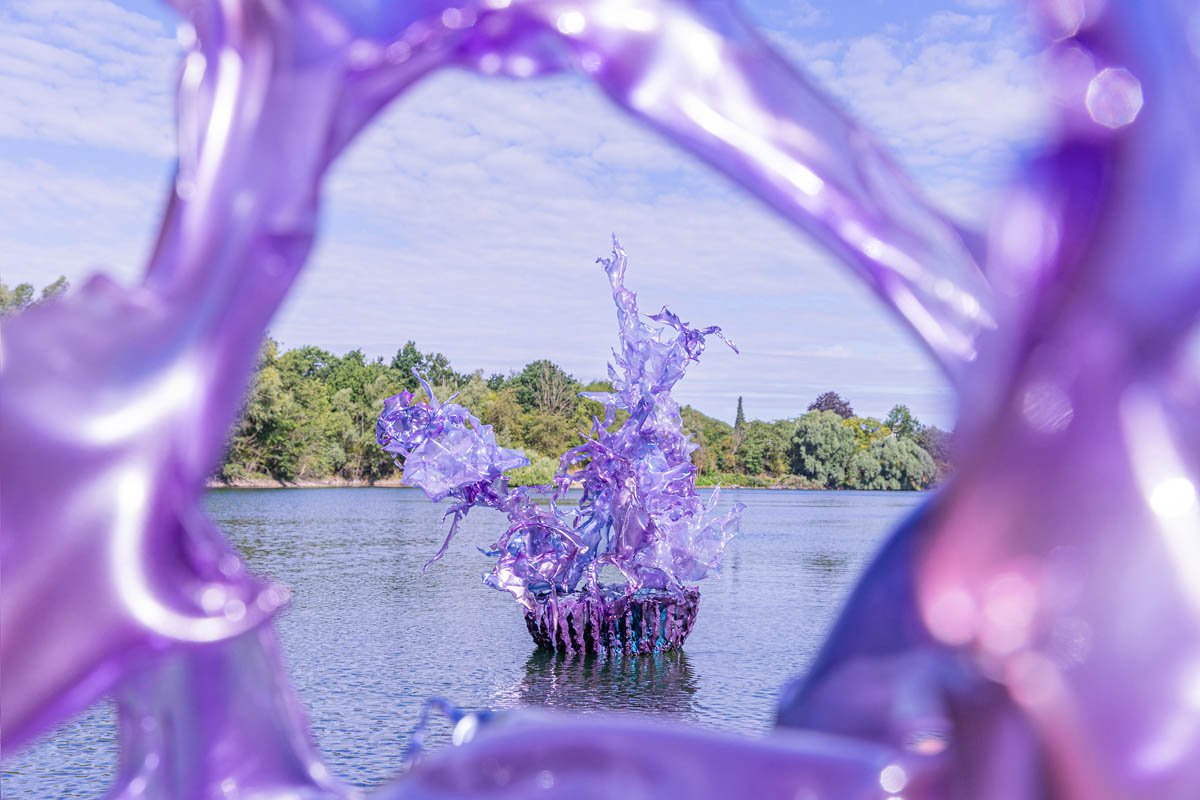
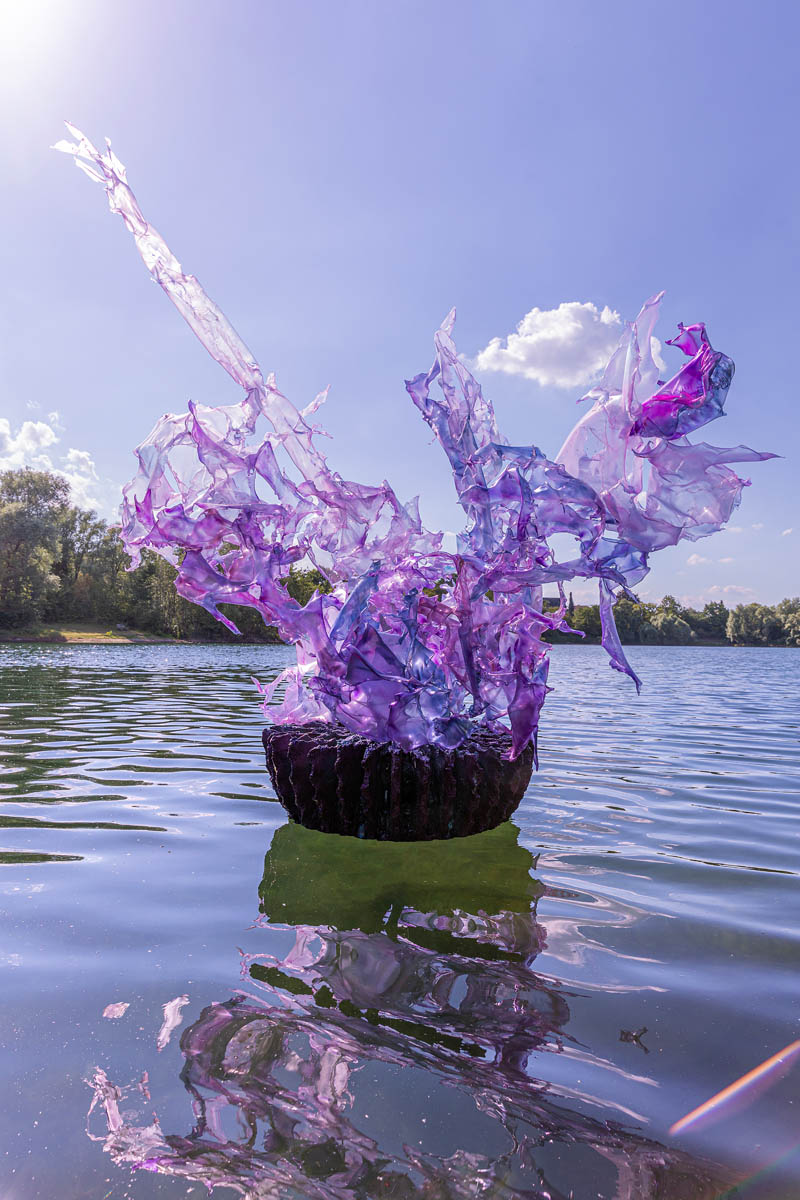
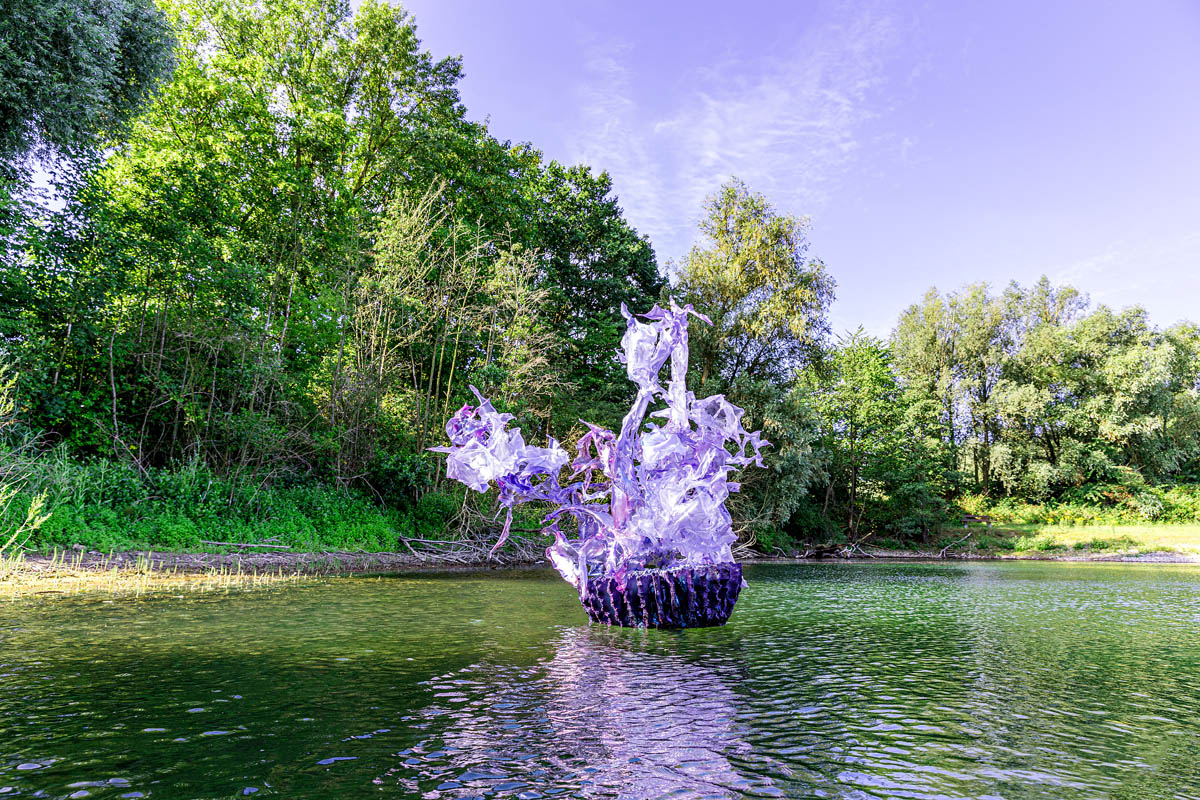
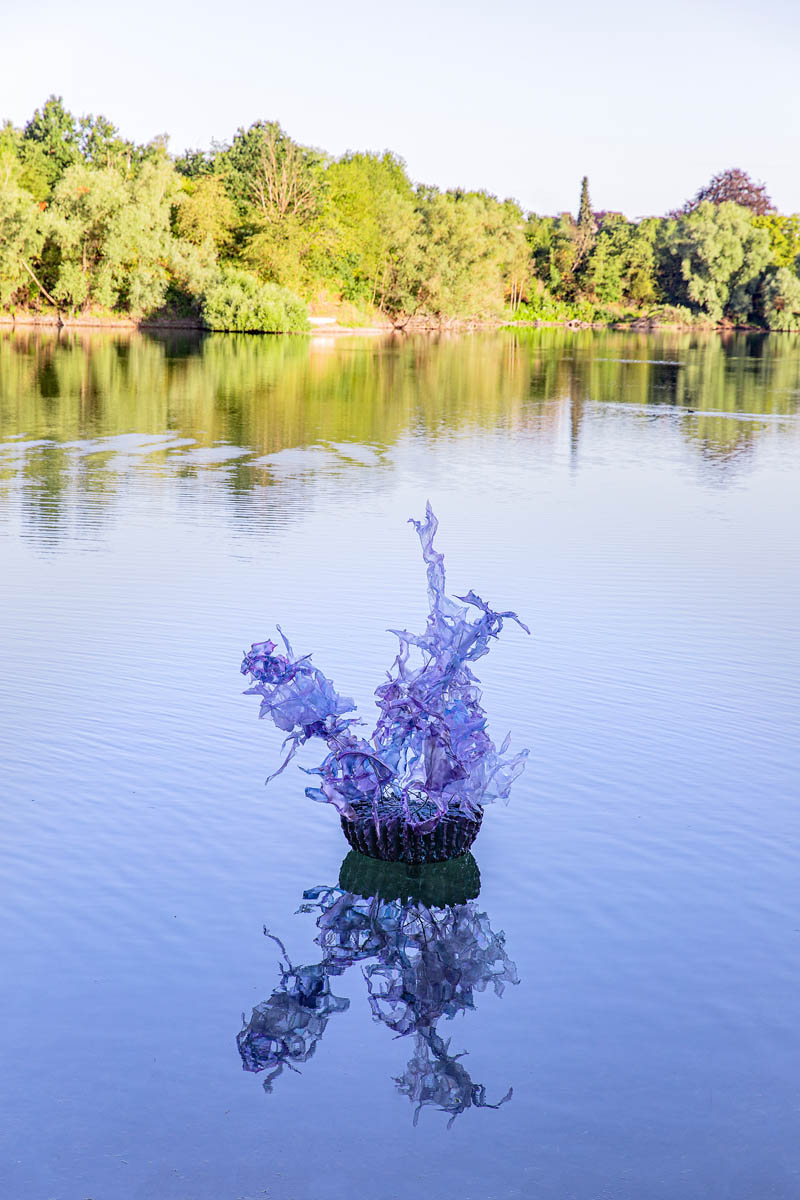
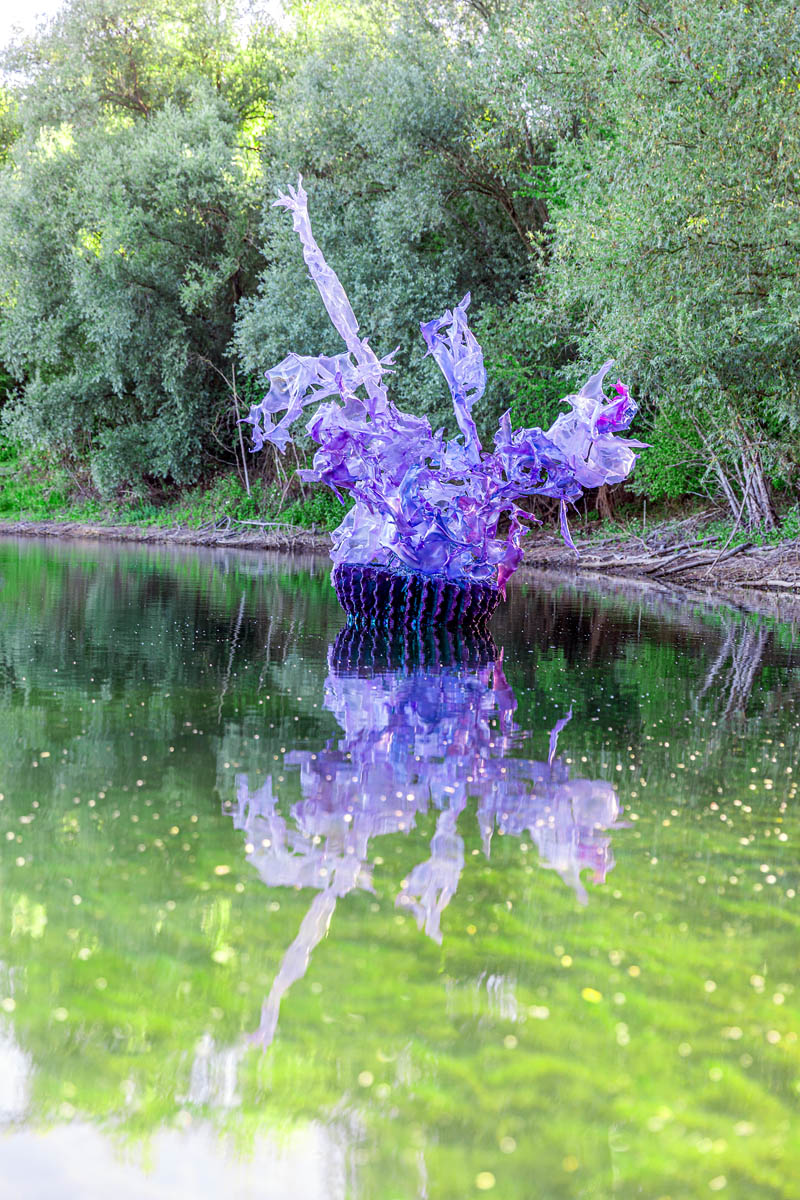
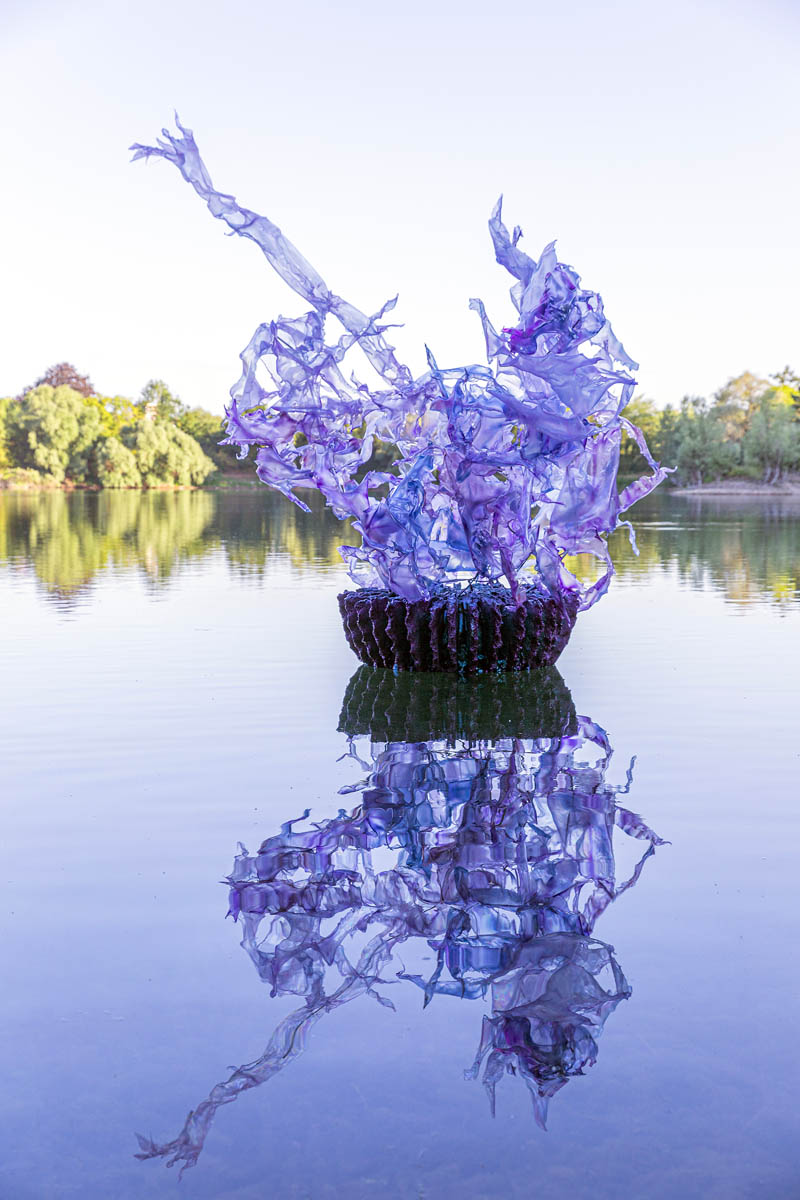
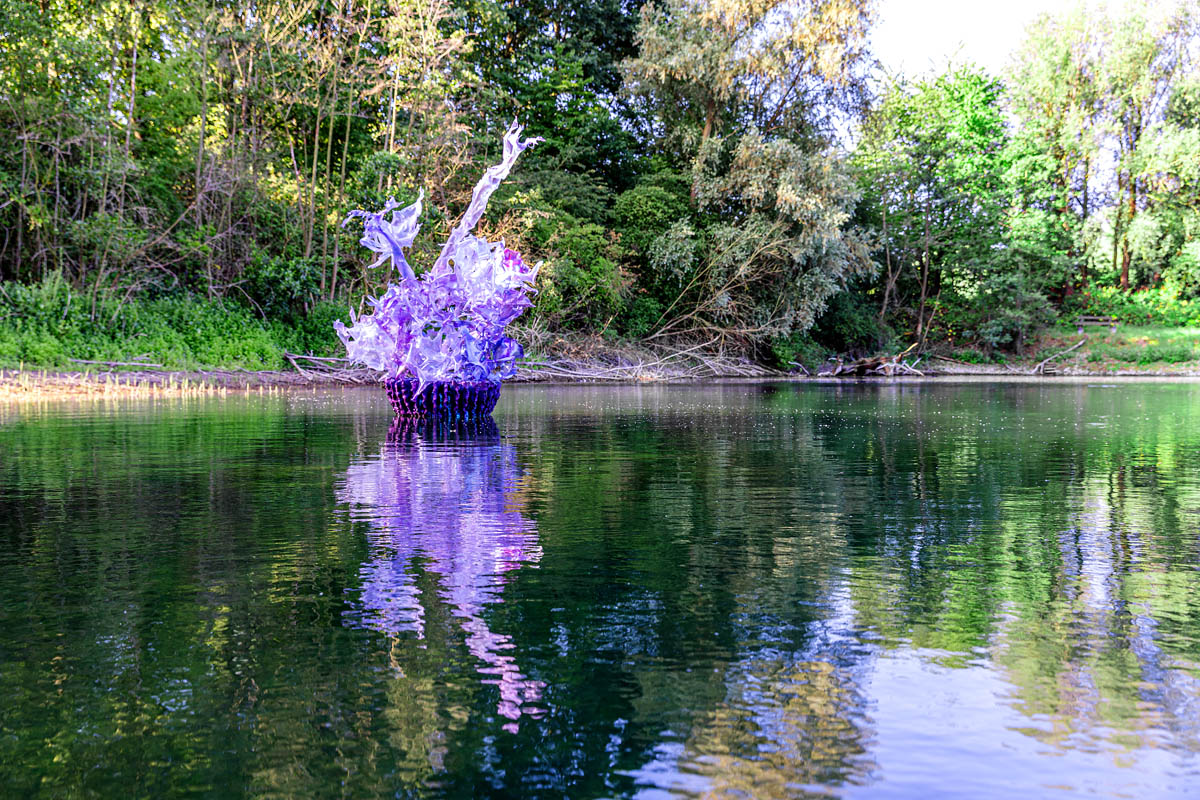
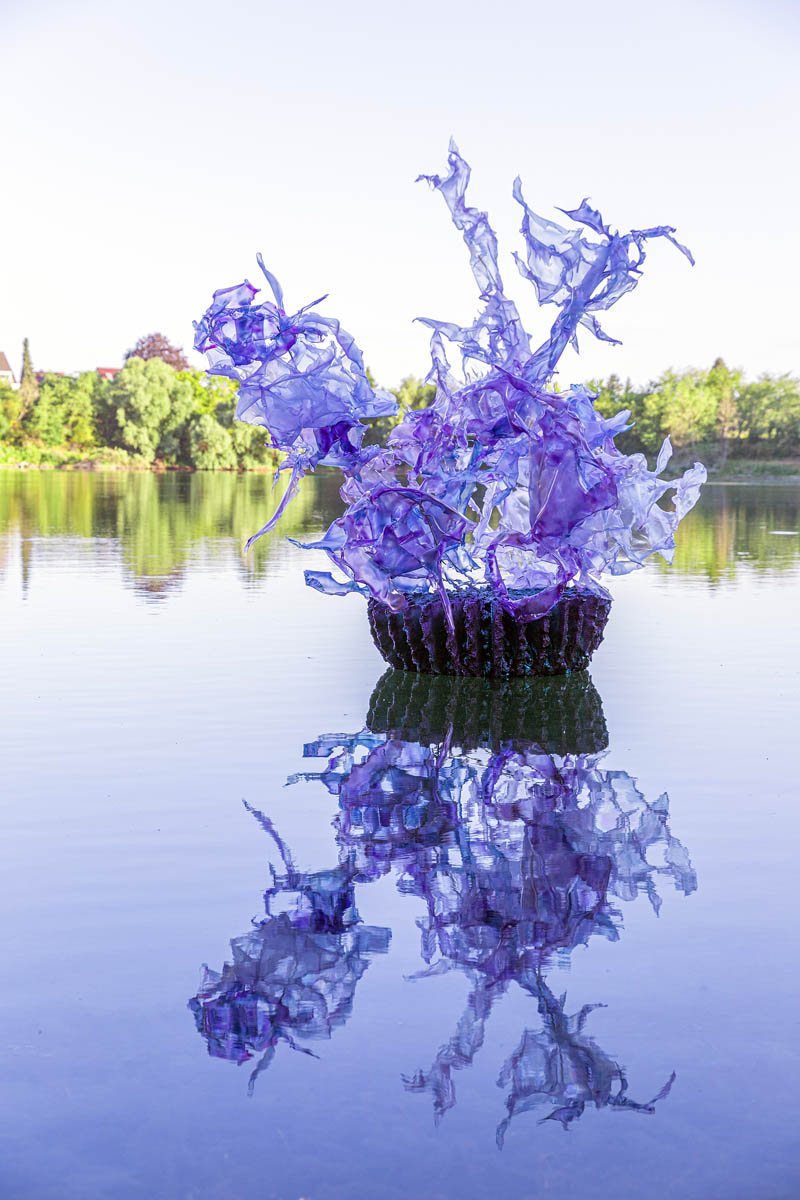
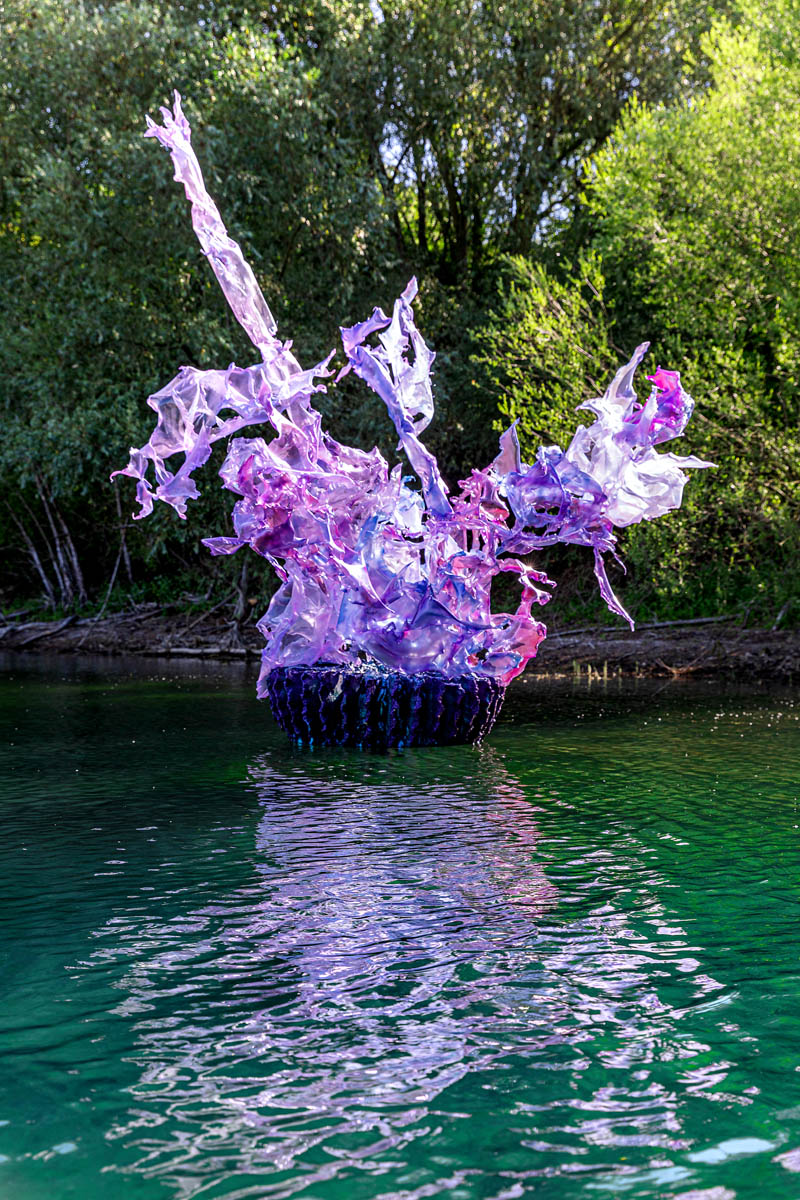
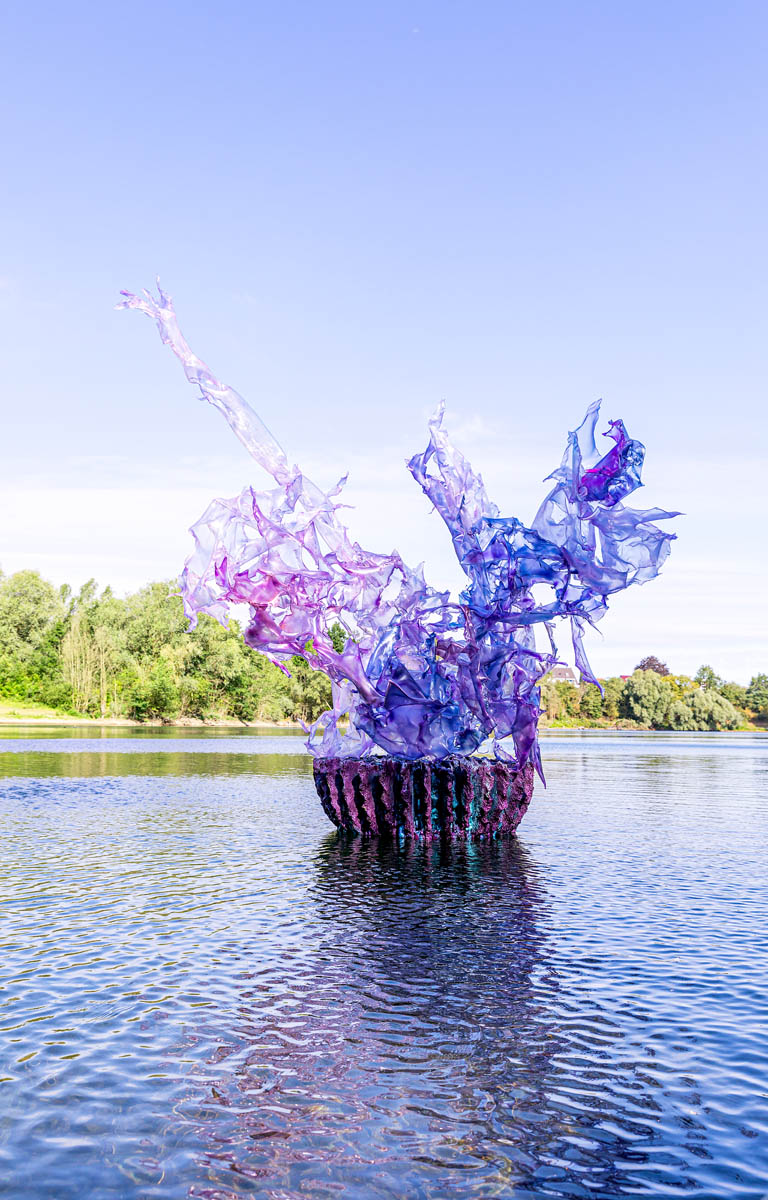
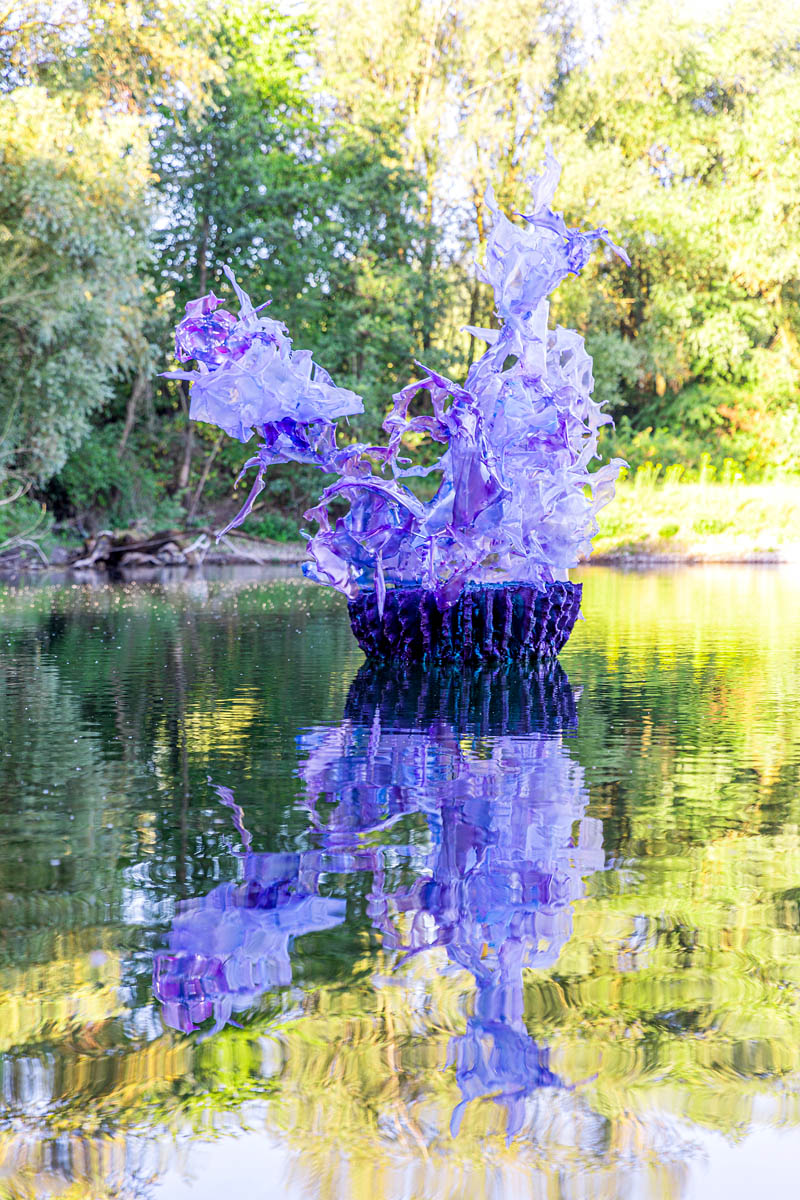
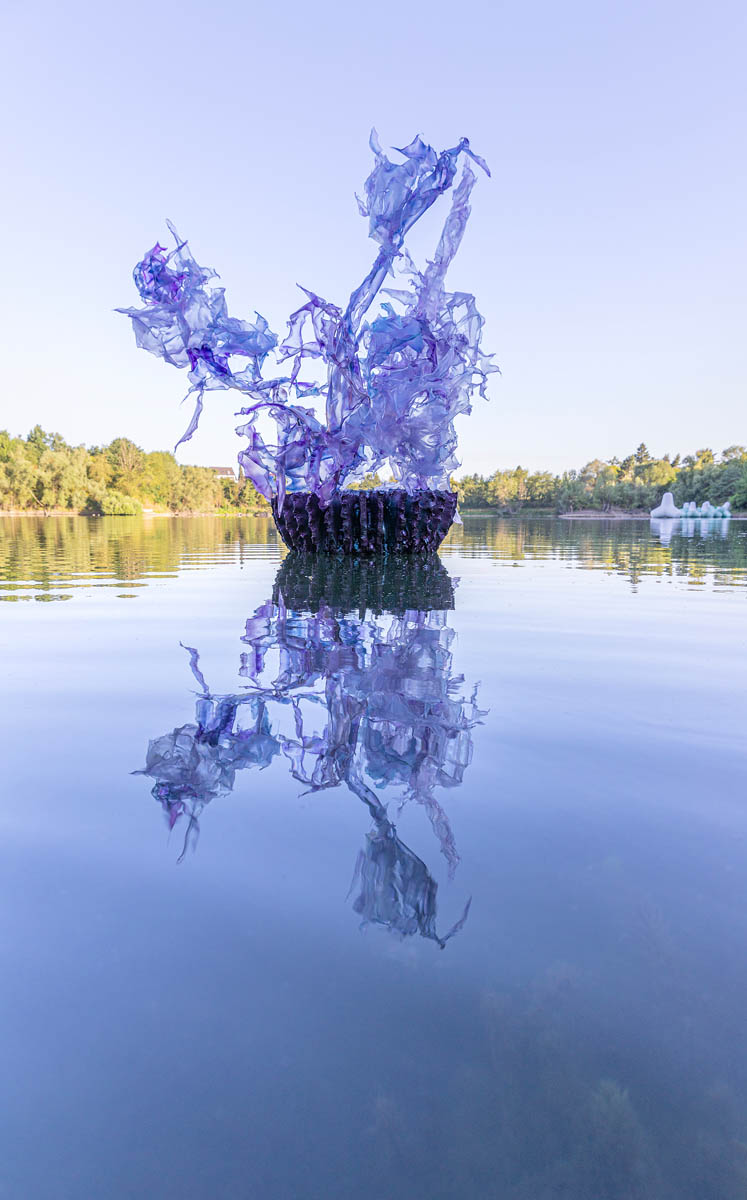
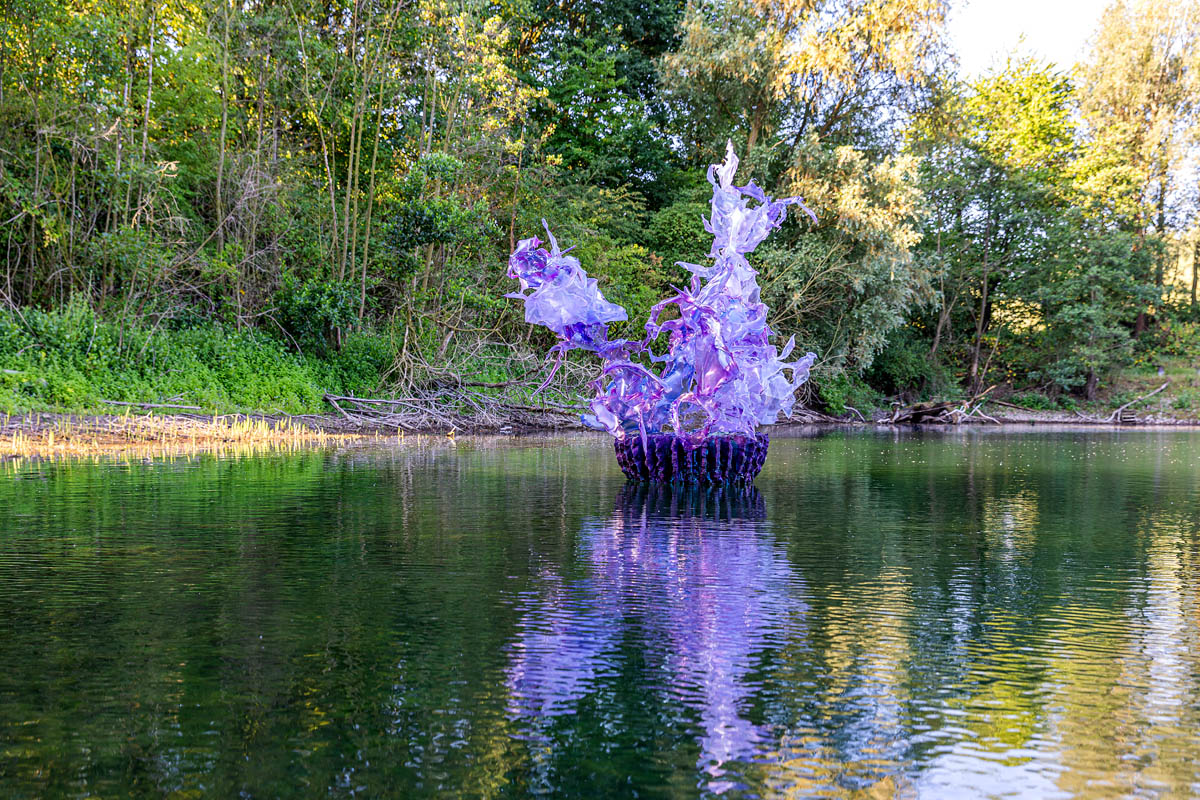
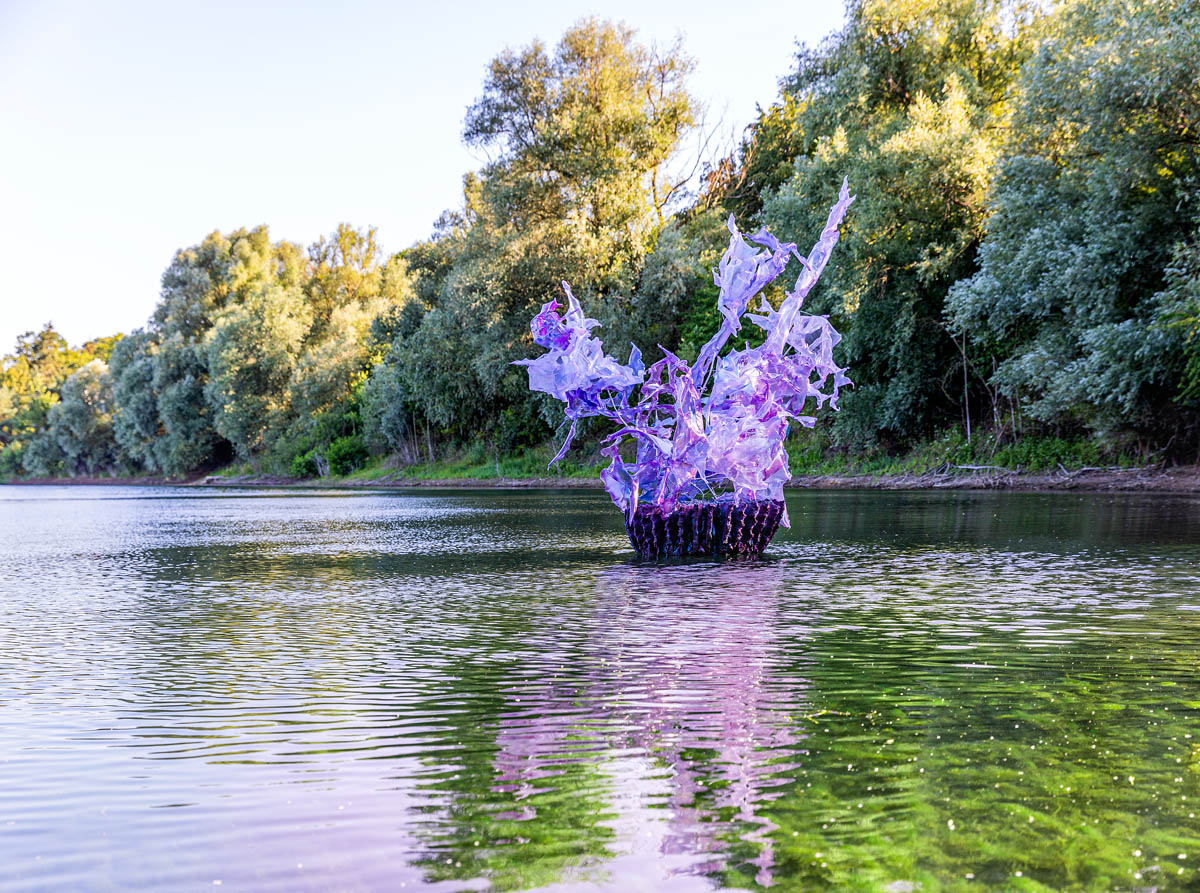
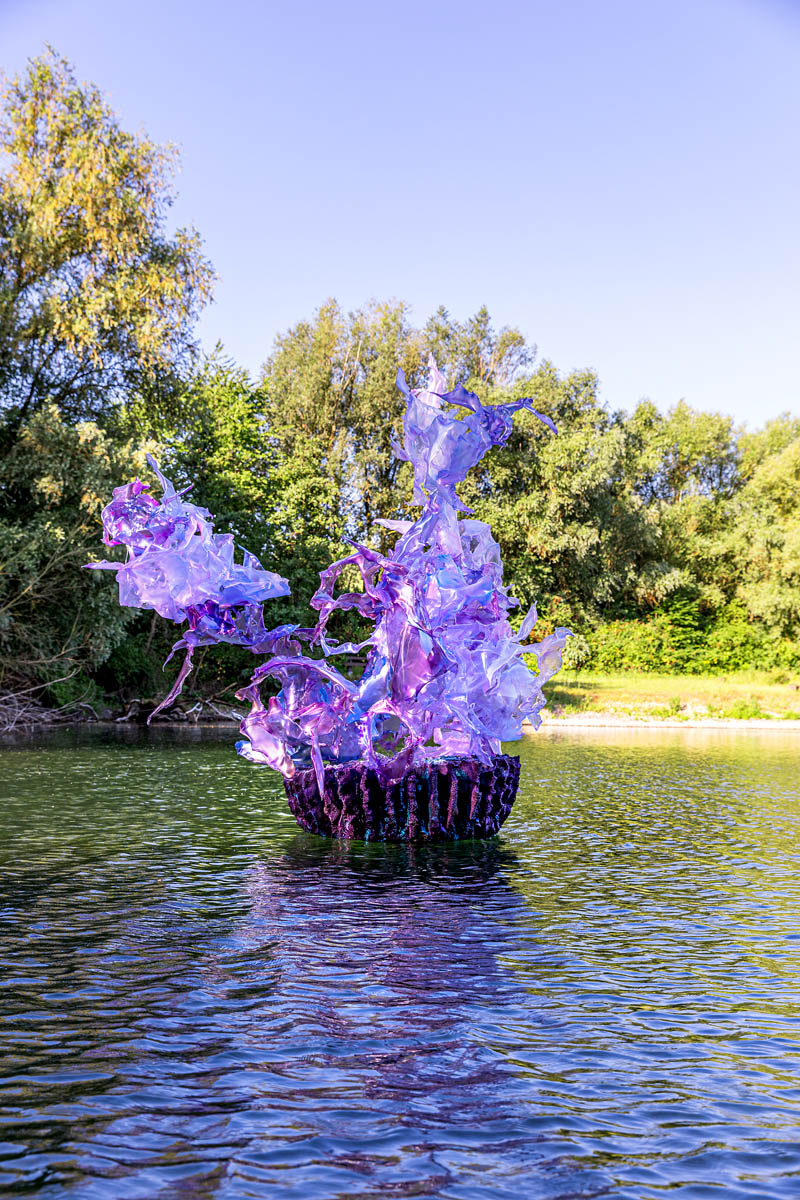
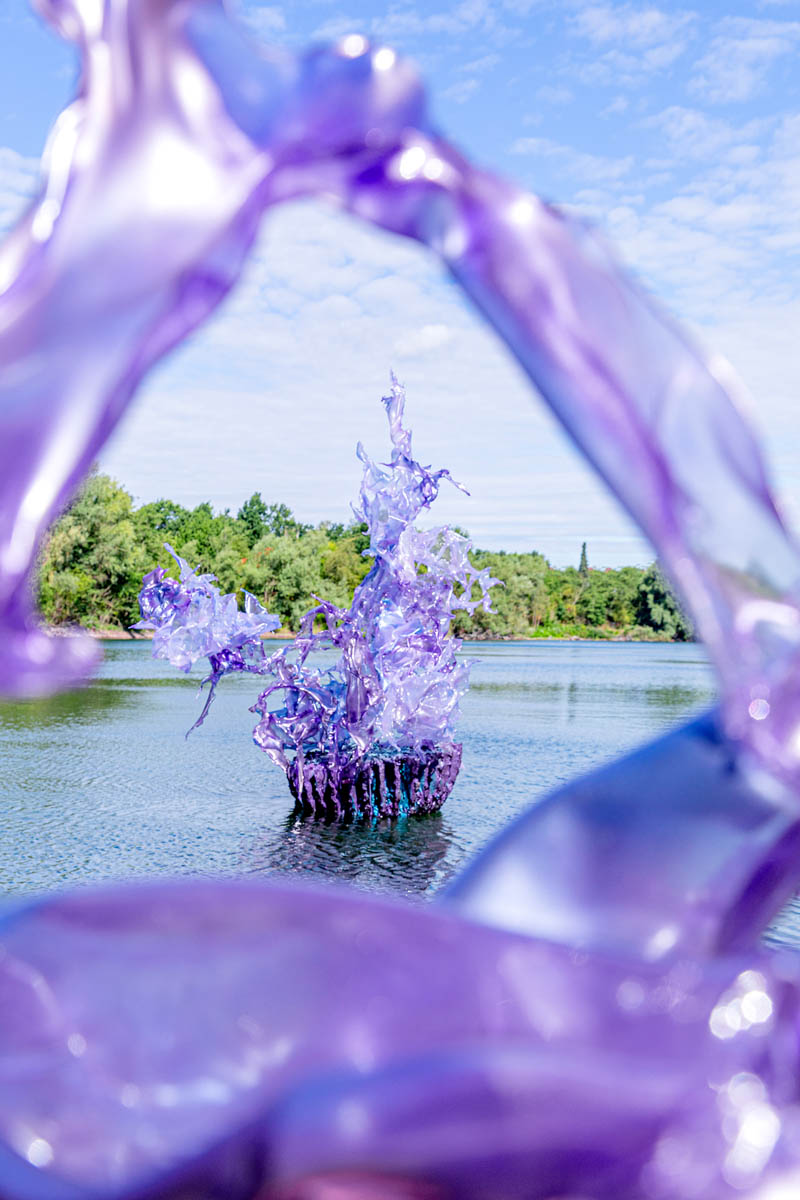
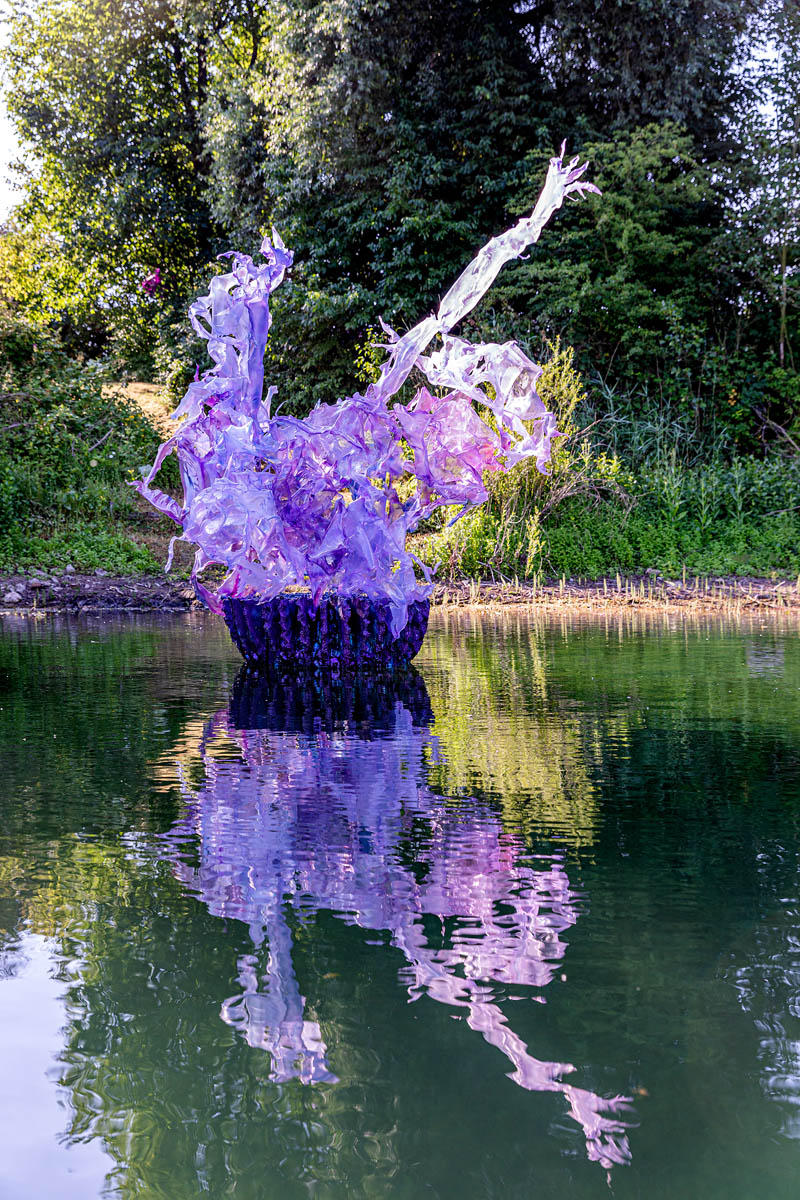
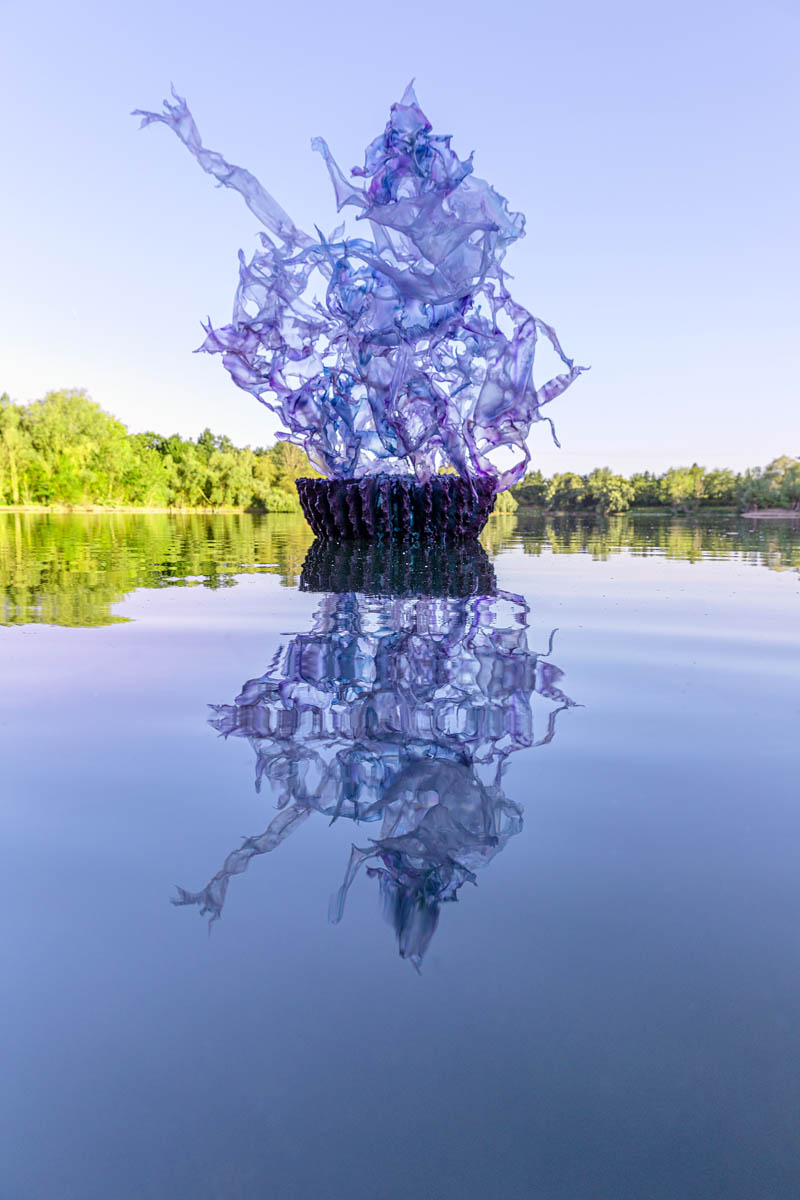
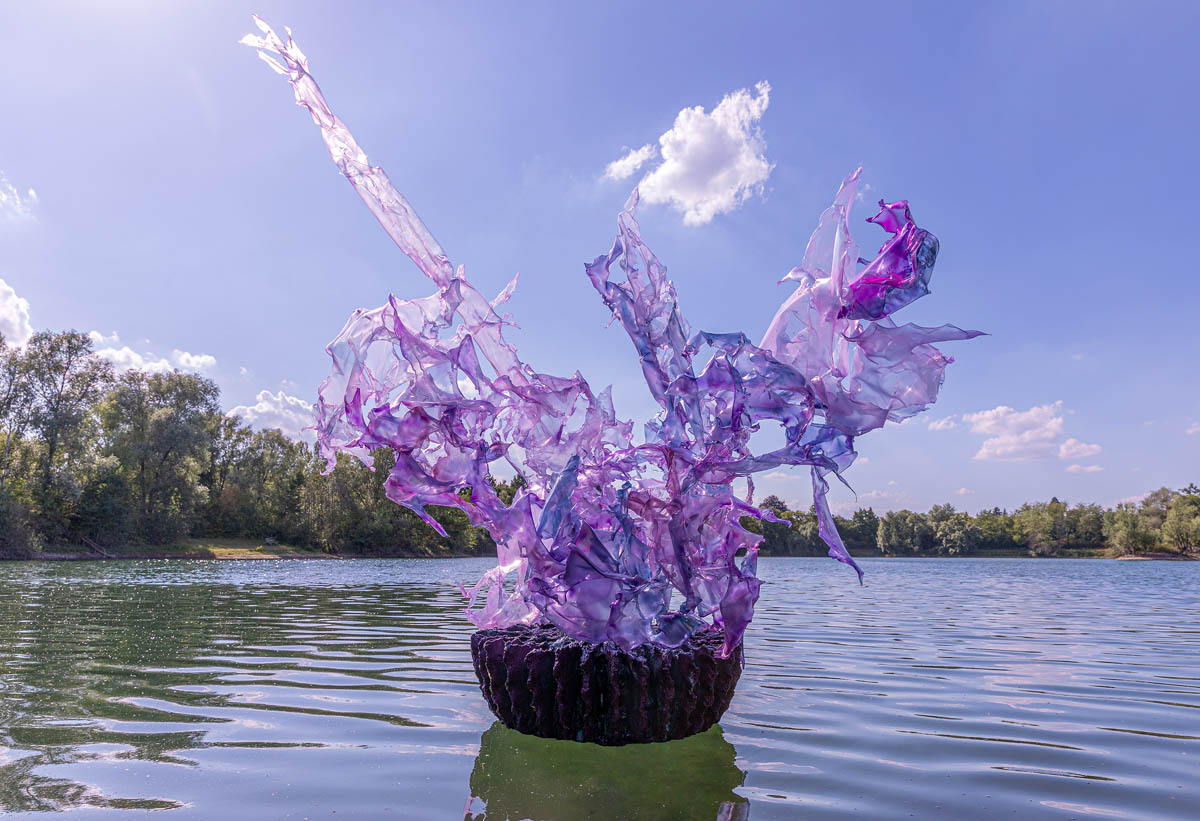
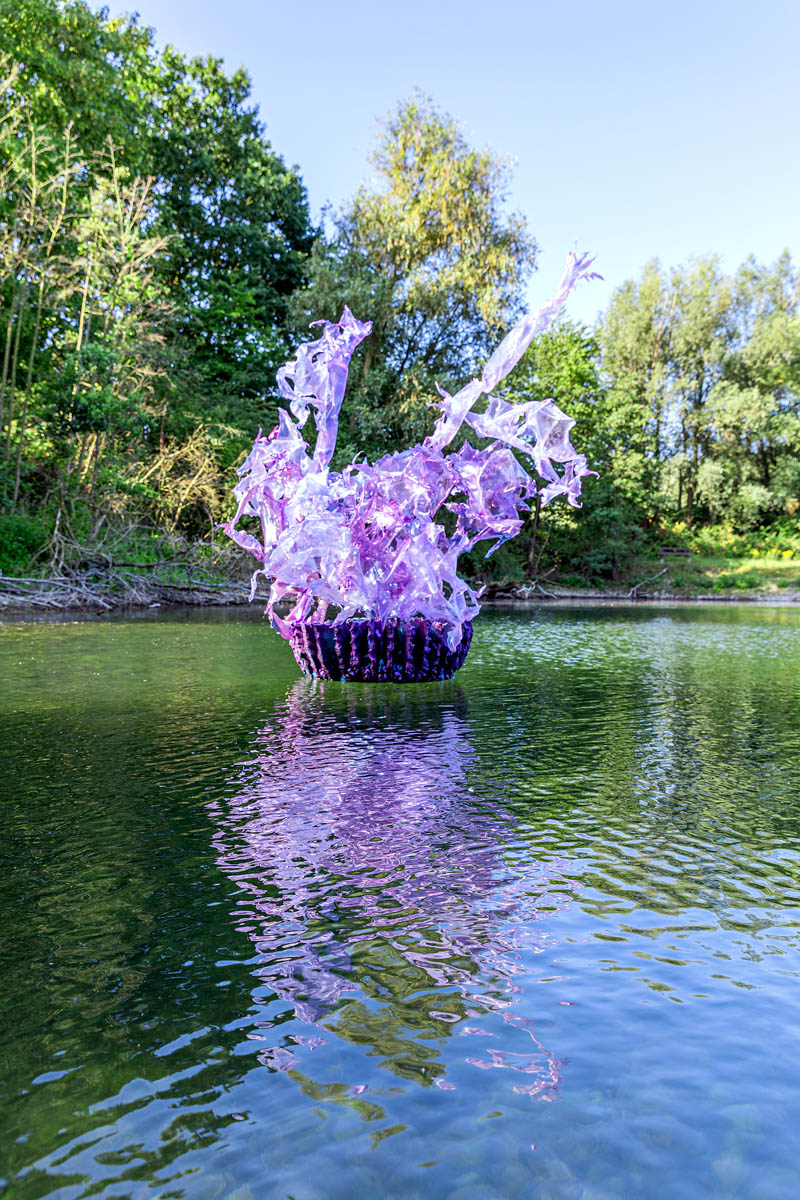
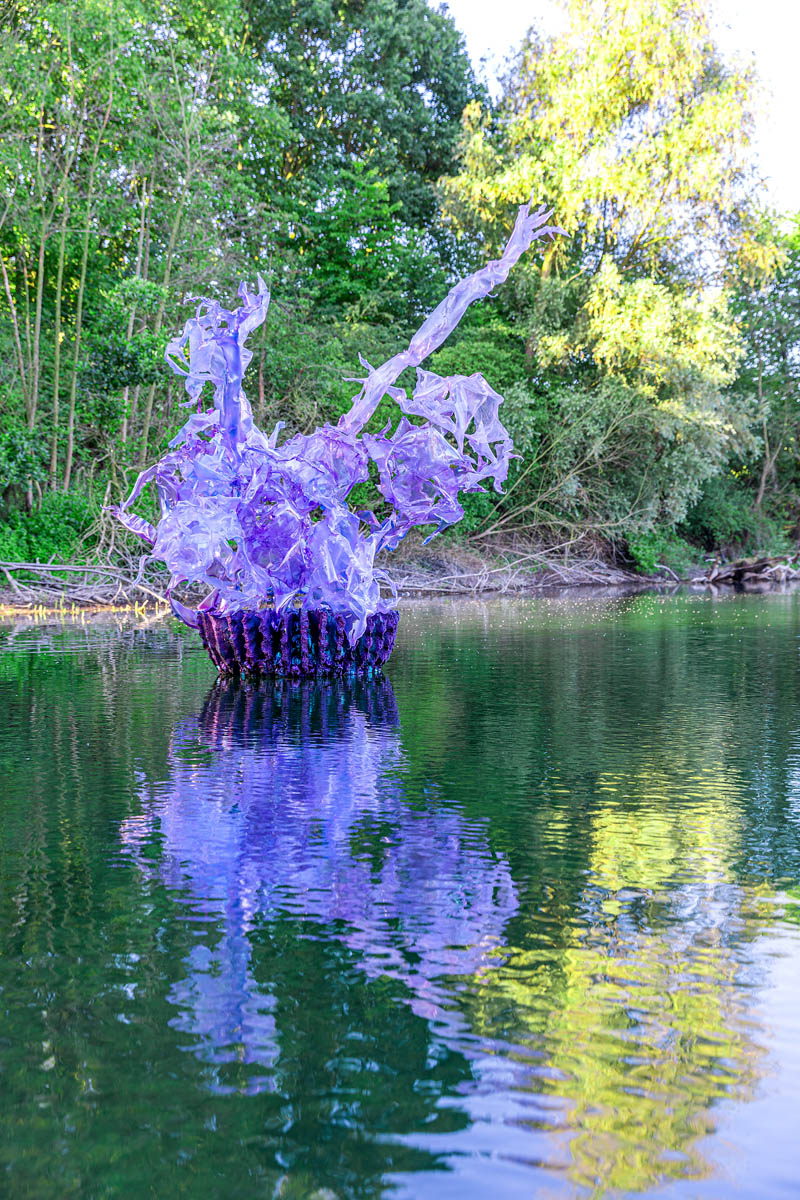
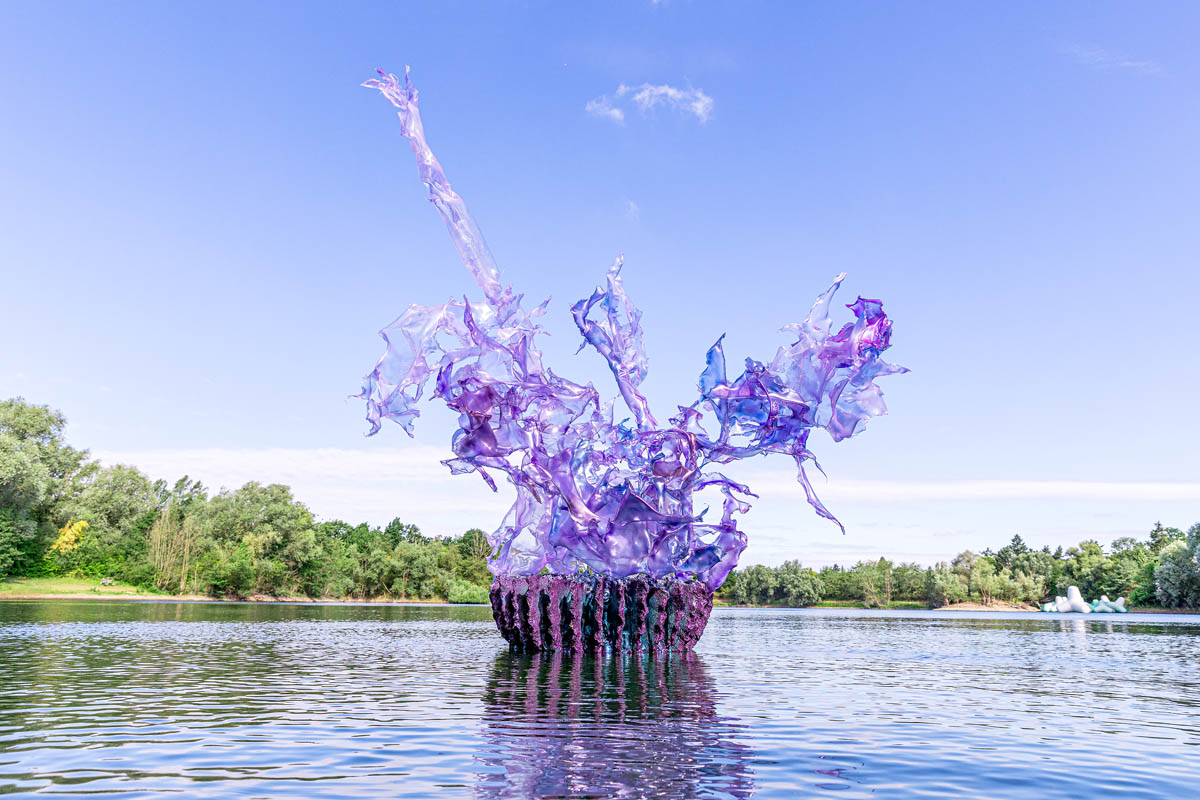
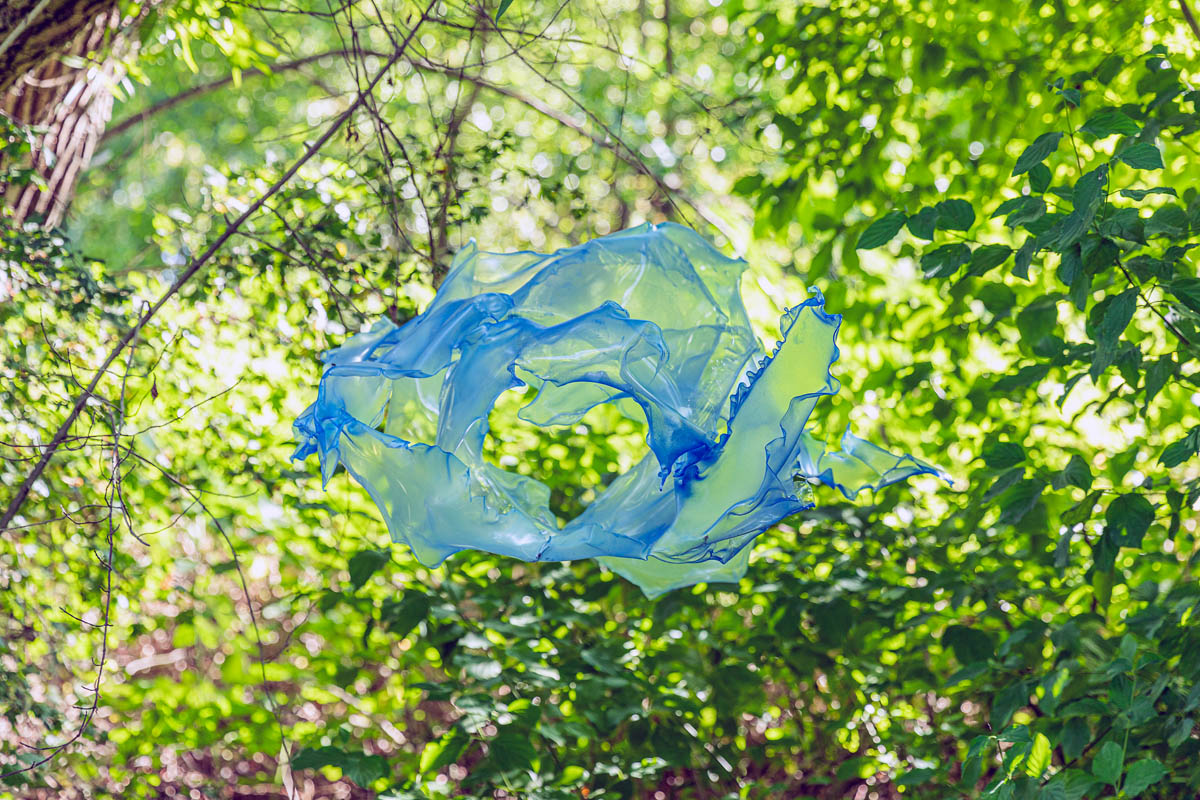
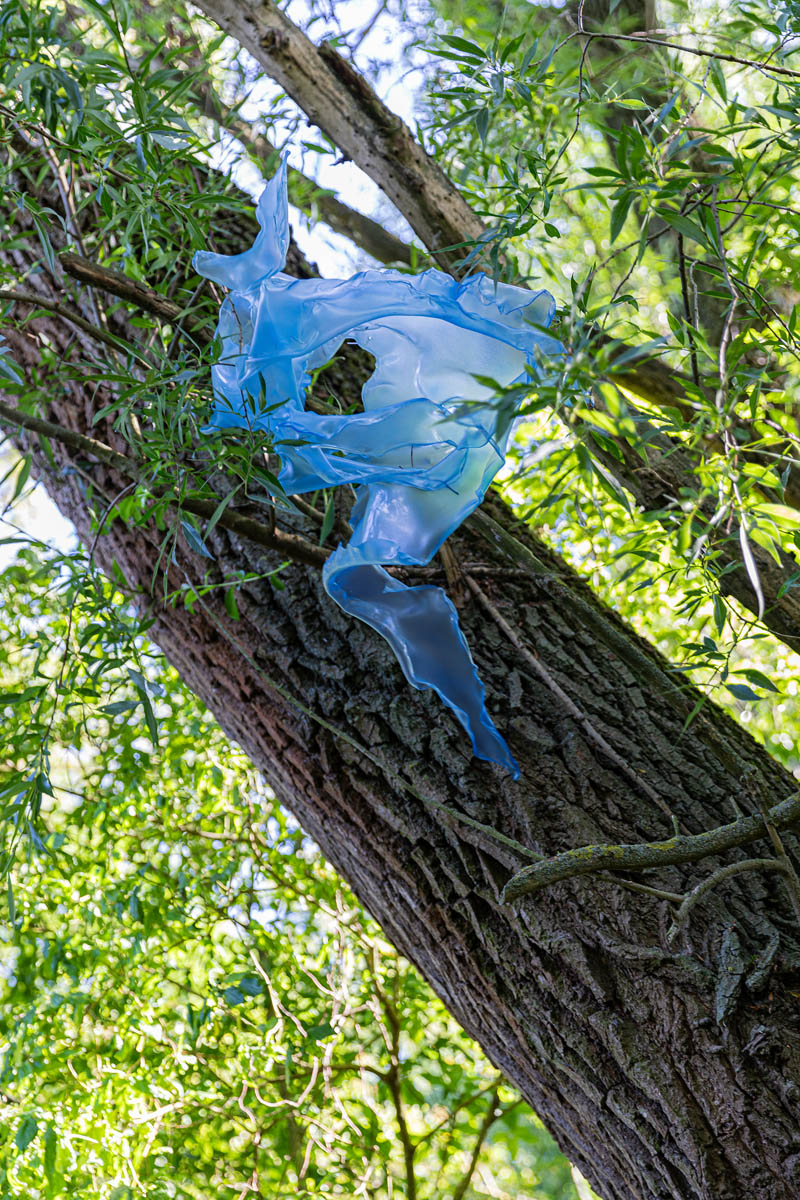
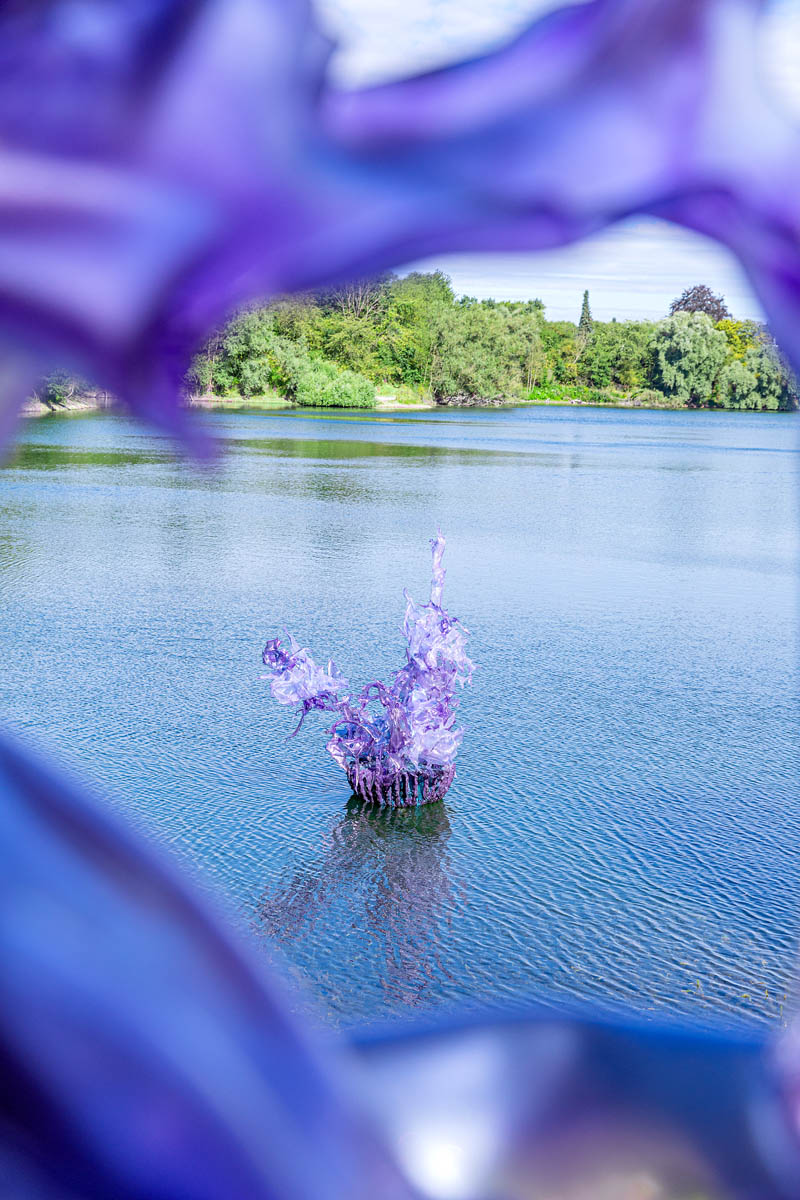
“Premeditatio Malorum” floats in the Suitbertus-See in Düsseldorf-Kaiserswerth, within a hidden, half-synthetic, normally inaccessible biotope of water, trees, algae, insects, former dinosaurs, reflections, sunlight, and weather. The work does not stand in the landscape as a sculptural object added to a scene; it behaves as a speculative design of organism deviating within a habitat. The lake is an outer nervous system. Wind edits the body; water surrounds the individual sculpture-beings when gusts pushing the installation to one side. Light penetrates and dissects it. The reflection on the water is a liquid phenotype, unstable, delayed, and continuously rewritten by waves. The drifting super-sculpture therefore exists as a relation: artificial synthetic hypothetical configuration, aquatic mutation, atmospheric condition, retinal uncertainty, and the viewer’s own “threat-to-me--or-not?” cognition. Water destabilizes all of these. A floating body is never completely identical with itself. In this sense, the work is thinkable as hydromorphogenesis and limnotaxis, as a quasi-being.
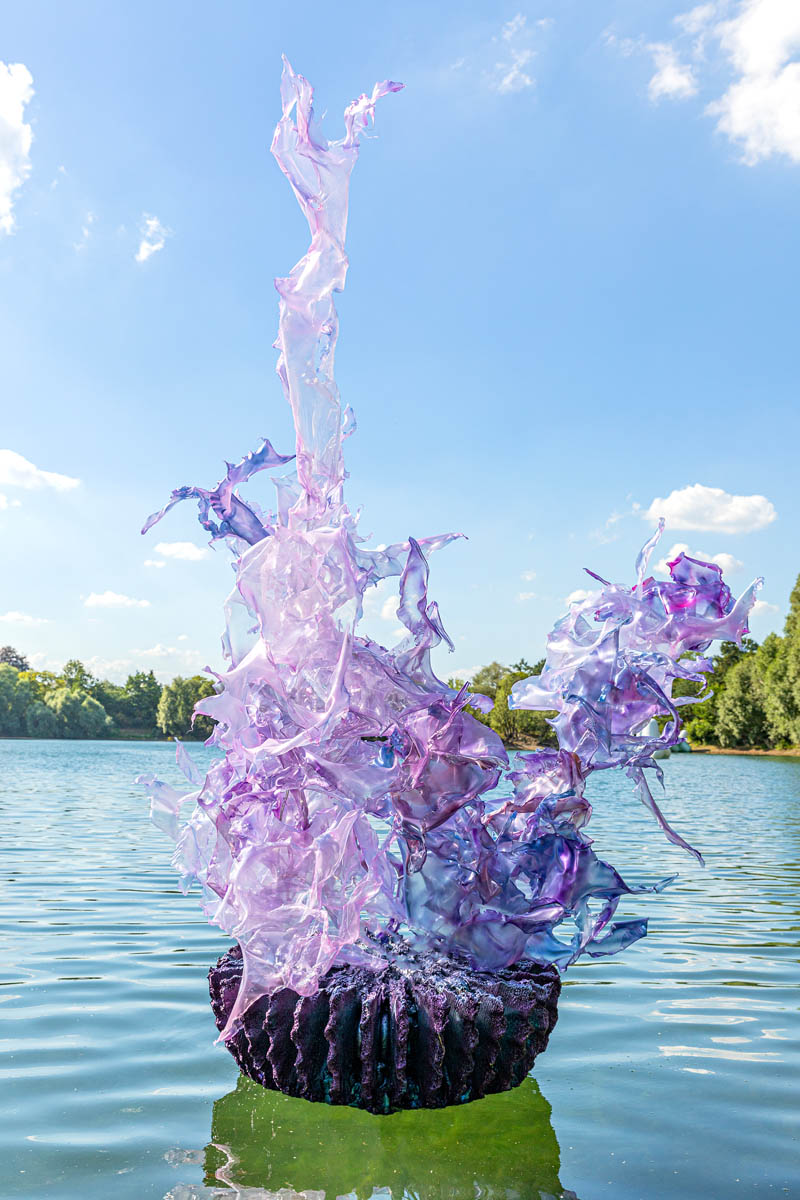
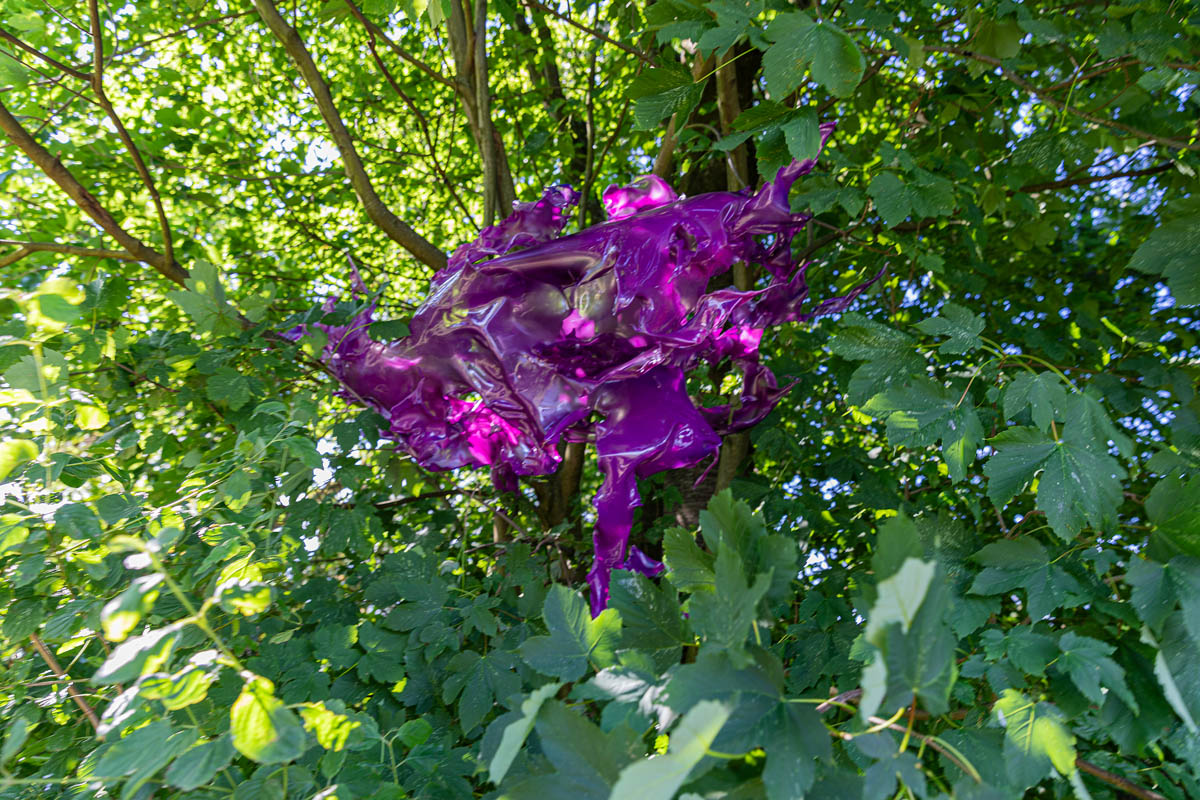
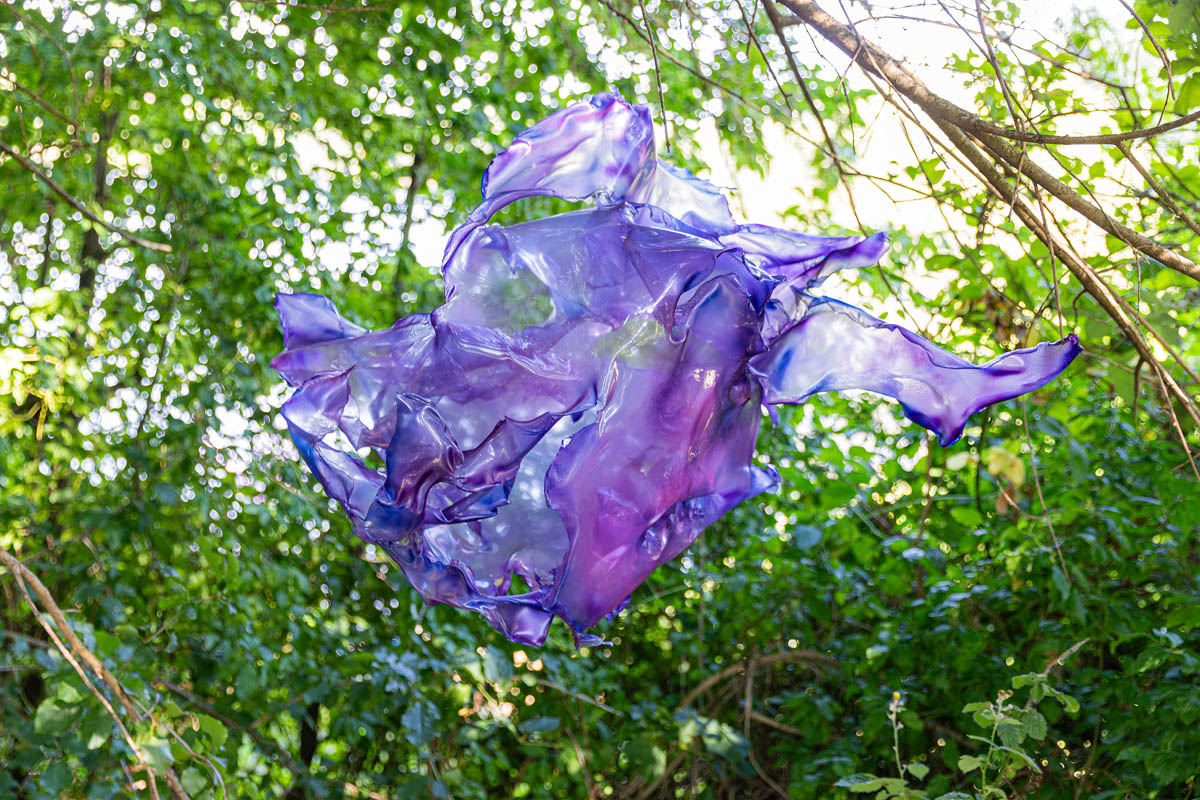
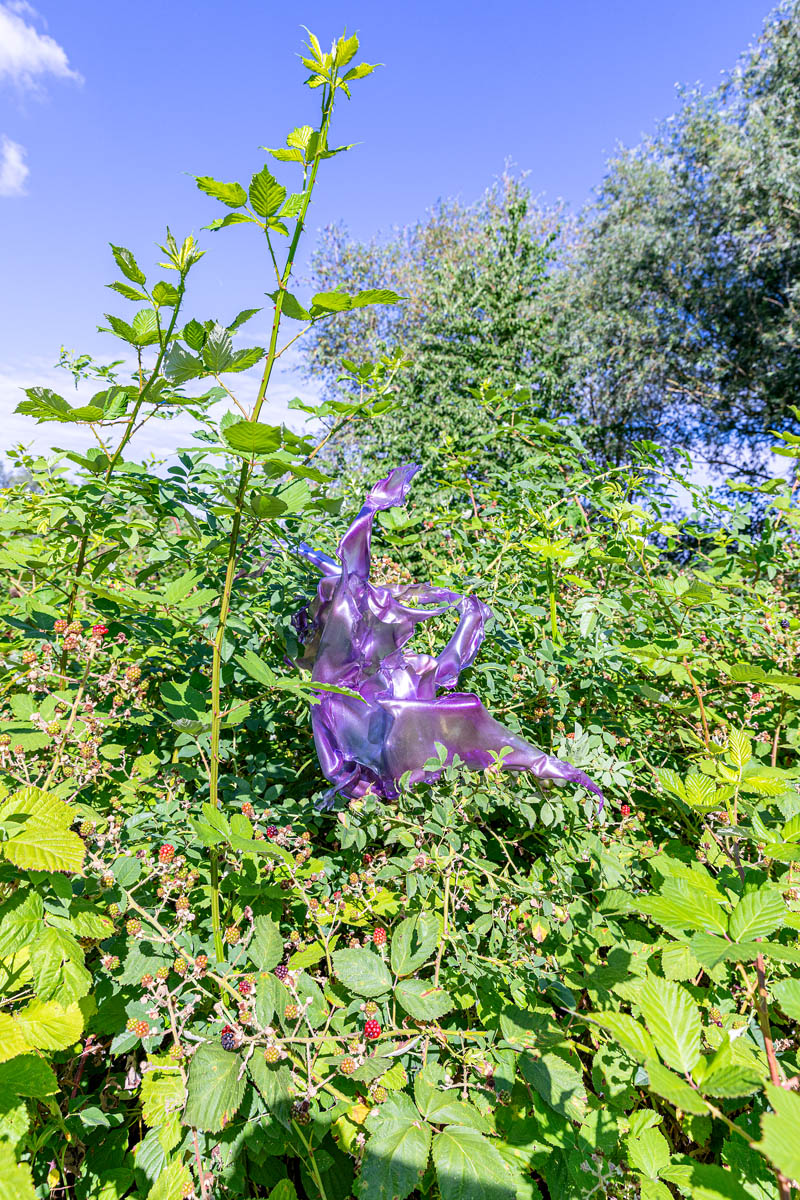
The translucent violet bioism rises from the water like a non-earthly creature, a strange organ, an unthinkable movement, an alien. Yet each comparison fails. It is not plant, animal, mineral, technology, apparition, or aesthetic function, although it penetrates each category long enough to contaminate it. It seems grown, but not born; wounded, but not injured; dangerous, but non-aggressive; fragile, but spatially dominant through near-weightlessness. Its membranes look like tissues after catastrophe, but no catastrophe is present. Its sharpness suggests attack, while its material transparency cancels the economy of violence known to us. The bioism is sublime and touching. This is where new biofact becomes more than biomorphic design. Bioism is not a return to nature, because nature in us is ethically insufficient. Nature is beautiful, but since not long ago it is also the half-blind algorithm of synthetic selection and economic adaptation. Bioism proposes another route: possible life after the tyranny of suffering, future bodies no longer enslaved to predation, and living processes that no longer require pain as their hidden function and universal meaning. It is not anti-life; it is possible anti-cruelty. It is not artificial against natural; it is paradise imagination against Darwinian fatalism. In this sense, the floating artwork extends paradise engineering, understood not as sentimental utopian decoration for the next generation of colonizing spaceships, but as an abolitionist project directed against involuntary suffering in sentient life. The question is not whether nature should be preserved as an aesthetic category, but whether the inherited and further developed machinery of pain should continue to be treated as sacred. If intelligence can reduce or abolish suffering, then the worship of “natural” cruelty becomes a failure of imagination and ethics. Yet a world with reduced suffering must not become sterile, cute, therapeutic, or administratively calm. Paradise is a deviation by far. It can exceed the old laws of violence in intensity, strangeness, and aesthetic depth; otherwise, the predator brain will continue to mistake cruelty for the sacred.
This is why “Premeditatio Malorum” may be a form of analgesic ferality: as wildness after pain has been abolished. It composes xenobiotic adoration: a beauty that enters the earthly biosphere like a foreign far-future compound, disturbing the perception of the odd. It offers preyless aura: the glow once produced by danger, now separated from victimhood. A wing must fly, a tooth must cut, a flower must seduce, a shell must protect, a human must suffer and work.
Bioisms must not.
They are not made to acquire value, to preach, or to be useful. “Premeditatio Malorum” denies priority of function, which is the polite name for command. It will not instruct, heal, explain, or serve anything.
It is not interesting to the current human superorganism.
It is an organism-like event that has escaped the prison of humanoid purpose.
It belongs to a possible world in which life is sentient flourishing, morphological freedom, and non-injurious intensity. It is not a symbol of innocence; within civilization, innocence is not an option. It is a model of impossible: restraint plus imagination.
It hovers in the lake as if the future had arrived too early: translucent, violet, unstable, non-classified.
https://kulturkenner.de/veranstaltungen/kunsthalle-duesseldorf-unterwegs-am-see
https://www.kunsthalle-duesseldorf.de/ausstellungen/beneath_the_surface_beyond_the_trees/
https://rp-online.de/nrw/staedte/duesseldorf/stadtteile/kaiserswerth/kunsthalle-duesseldorf-bietet-ausstellung-am-suitbertus-see_aid-150743369
https://nordbote.de/der-verborgene-suitbertus-see-in-kaiserswerth-wird-zur-kunstbuehne